
Hybrid Cloud Deployment Models for Banks Handling Regulated Data
Compare public, private, and hybrid cloud options to meet compliance needs while scaling fintech applications without hidden infrastructure costs.

Hybrid Cloud Deployment Models for Banks Handling Regulated Data
Banks handling regulated data often hit a wall with cloud computing. Full public clouds raise compliance flags while private setups limit the scalability modern operations demand. This tension has grown sharper as institutions seek both operational flexibility and strict adherence to data protection rules.
What Are the Main Cloud Deployment Models Available to Banks?
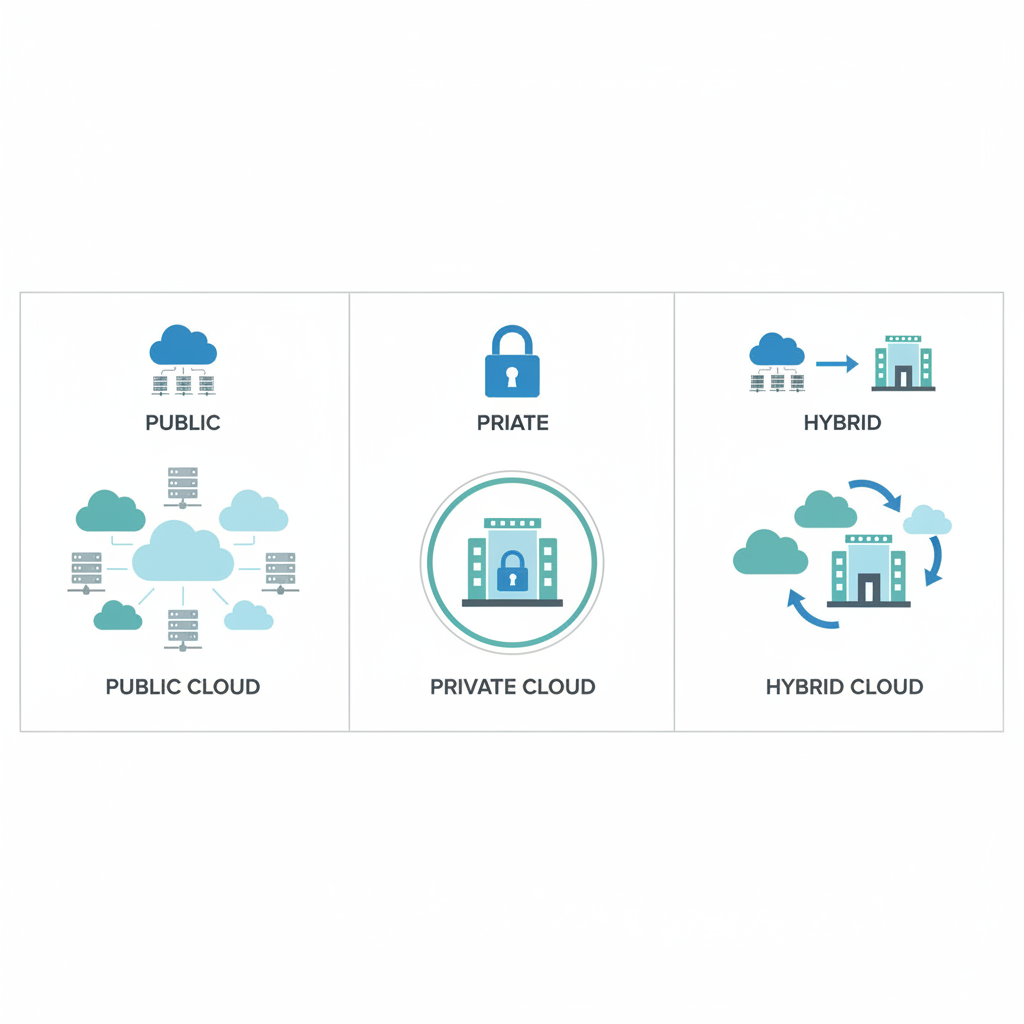
Public cloud environments deliver on-demand resources from third-party providers. Private clouds run dedicated infrastructure under direct institutional control. Hybrid models combine the two. Many banks already rely on cloud computing, yet they still face limits when sensitive workloads encounter data residency rules or internal hosting mandates.
Regulatory constraints unique to banking include requirements from bodies like the Federal Reserve Board, Federal Deposit Insurance Corporation, and Federal Financial Institutions Examination Council. These expect institutions to manage outsourced relationships under safety and soundness standards. Key compliance standards such as PCI DSS, SOC 2 Type II, OCC guidelines, and FFIEC IT examination handbooks further shape decisions.
Hybrid deployment stands out because it lets banks place regulated workloads where control is tightest while routing other functions to scalable public resources. Common implementation models include traditional on-premises and public cloud integration, distributed hybrid setups, and federated or community deployments. Selection typically hinges on regulatory requirements, data residency constraints, client infrastructure strategy, and operational maturity.
How Does Each Cloud Model Address Regulatory Compliance?
Public cloud services operate under a shared responsibility model. This can create friction around data residency when jurisdictions require information to remain within specific borders. The setup works for non-sensitive functions but often triggers additional controls for payment data or customer records.
Private cloud environments give banks full oversight of infrastructure and data flows. This suits institutions with strict data residency requirements or mandates for internal hosting. Yet this approach shifts the entire operational burden inward, including security patching, capacity planning, and audit readiness.
Hybrid configurations reduce exposure by allowing selective placement of regulated workloads in private segments while using public capacity elsewhere. This combination lets firms keep sensitive data inside controlled environments without forgoing public cloud elasticity for analytics or customer-facing applications. The Gramm-Leach-Bliley Act extends its data protection obligations fully into whichever environment holds the information, reinforcing the need for clear segmentation rules.
What Are the Cost Implications of Public, Private, and Hybrid Models?
Public cloud adoption typically produces meaningful cost savings for banks through reduced capital expenditure. Savings arise from shifting to operational expenditure patterns and avoiding over-provisioning, though compliance-driven add-ons such as encryption gateways or residency controls can offset part of the benefit.
Private deployments demand higher upfront investment in hardware, facilities, and specialized staff. Ongoing operational costs remain elevated because institutions absorb maintenance, upgrades, and 24/7 monitoring without the economies of scale available to large providers.
Hybrid models create optimization opportunities by matching workload characteristics to the lowest-cost compliant environment. Less sensitive batch processing or development workloads move to public resources, while core ledgers stay private. This selective approach lowers overall spend compared with an all-private strategy while preserving the control regulators require.
How Can Banks Implement a Hybrid Cloud Strategy Effectively?
Successful adoption begins with workload classification and data mapping exercises that identify which applications must remain private and which can safely use public capacity. Factors such as regulatory requirements and operational maturity guide these decisions.
Integration patterns vary by model. Traditional setups connect on-premises systems to public clouds through secure gateways, while distributed hybrid and federated approaches spread workloads across multiple environments with consistent identity and policy layers. A hybrid roadmap defines target architecture, workload segmentation, data residency rules, vendor dependencies, migration waves, and governance.
DevOps pipelines and software engineering standards play a central role in maintaining consistency across these setups. Automated deployment scripts enforce security baselines across environments. Continuous monitoring tracks compliance posture. Infrastructure-as-code practices reduce configuration drift. These disciplines turn hybrid complexity into repeatable, auditable processes rather than ad-hoc connections. Banks that treat cloud computing this way often borrow lessons from startup technology approaches, where rapid iteration meets strict controls without slowing delivery.
Teams also benefit when they embed software engineering best practices early. Version control for infrastructure definitions, automated testing of compliance rules, and clear rollback procedures all help. Without this foundation, even well-planned hybrid environments can drift into operational headaches.
What Pitfalls Should Banks Avoid When Adopting Hybrid Cloud?
Over-fragmentation occurs when teams scatter workloads without clear governance. This creates management overhead that erodes the intended efficiency gains. A structured classification framework prevents this drift.
Inconsistent security policies across clouds create gaps that auditors quickly flag. Unified policy engines and centralized logging help maintain equivalent controls whether data resides in private or public segments.
Skills gaps in DevOps and cloud-native engineering slow implementation and raise risk. Institutions that invest in targeted training and cross-functional teams close these gaps faster than those relying solely on external consultants. Many organizations now follow multi-cloud strategies, which amplifies the need for disciplined engineering practices from the start.
Another common issue surfaces when banks underestimate the cultural shift required. Hybrid cloud is not just a technical choice. It demands new ways of thinking about ownership, incident response, and collaboration between security, compliance, and engineering groups. Without attention to these human elements, even solid technical designs can stall.
A well-designed hybrid cloud deployment model lets banks meet regulatory obligations without sacrificing the agility that cloud computing enables. By combining disciplined software engineering, mature DevOps practices, and clear workload governance, IT teams move from compliance anxiety to confident, cost-effective operations. The real test comes in how smoothly those teams adapt when rules or workloads change next quarter.
Related Articles

Shifting from Centralized Cloud Computing to Distributed Compute Models

Cloud Computing Difficulty Breakdown: Conquer Hard Concepts Like Disaster Recovery

Edge AI Deployment on Cloudflare Workers: Cutting Latency and Costs for Developer Productivity in Cloud Computing