
Shifting from Centralized Cloud Computing to Distributed Compute Models
See how organizations are moving beyond traditional cloud computing to decentralized setups for better scalability, lower costs, and reduced outage risks.

Shifting from Centralized Cloud Computing to Distributed Compute Models
Enterprises took real hits from cloud outages last year. Those events laid bare how brittle a single-vendor setup can become when everything funnels through a few big regions. With technology trends pushing workloads outward, more teams are testing distributed compute models to keep operations running and regain some control over where their data actually lives.
Understanding Distributed Cloud Computing
Distributed cloud computing spreads infrastructure and workloads across many locations and providers instead of parking everything in one or two massive data centers. Traditional setups keep resources in a handful of primary regions owned by a single vendor. The distributed approach puts capacity at edge sites, mixes services from several providers, and moves some decisions closer to where the data is created.
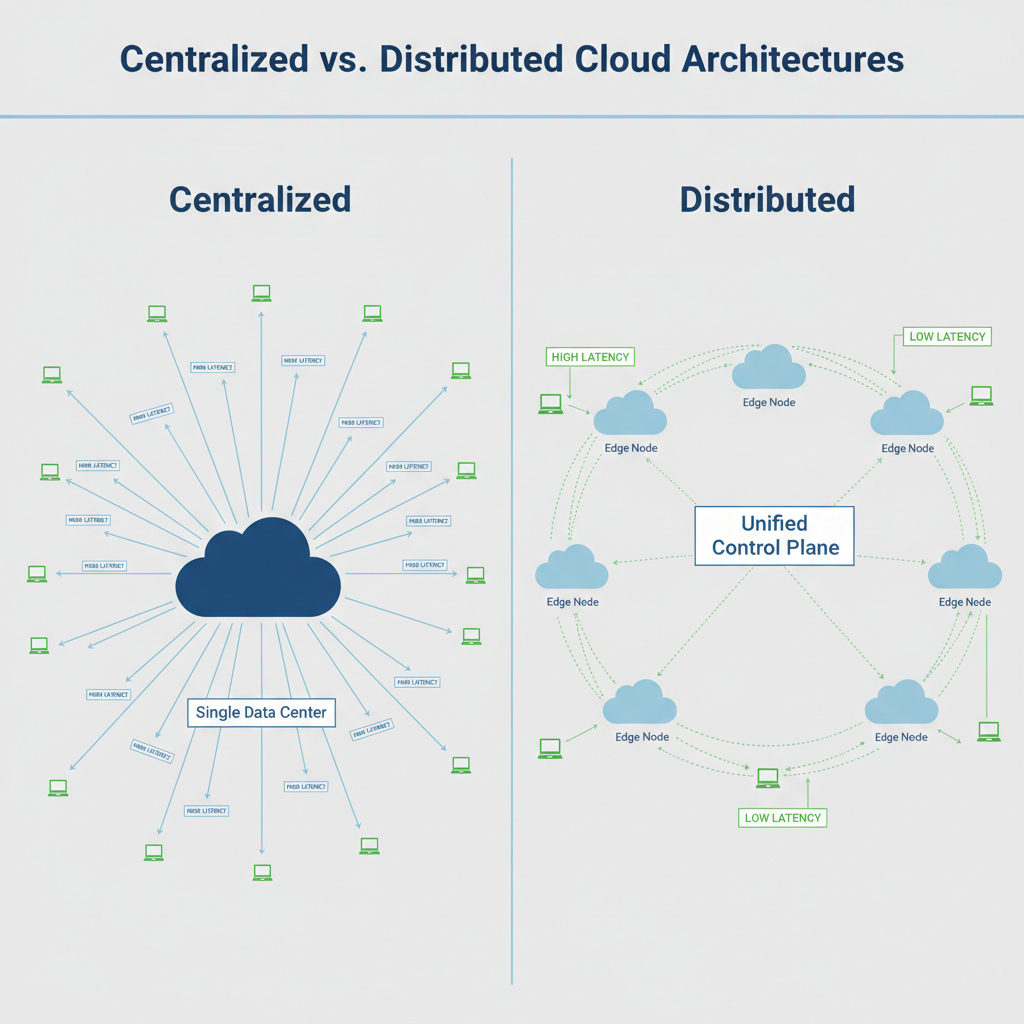
Key differences show up in how systems grow. You add smaller nodes horizontally rather than scaling up one giant machine. Tasks run in parallel, which trims the time needed for heavy jobs. Idle capacity across the network gets used instead of sitting empty. Management tools now have to orchestrate across mixed environments while still giving teams one clear view of everything.
Why Teams Are Moving Away from Centralized Cloud Computing
Centralized models create obvious single points of failure. One regional outage can stop work everywhere. Latency stays high for users who sit far from the main hubs. Vendor lock-in also limits options when rules change or new geographic limits appear.
Recent figures show most organizations already run multi-cloud setups. The numbers suggest plenty of teams have hit the ceiling on single-provider dependence and are spreading workloads to regain flexibility.
Where Distributed Models Deliver the Biggest Wins
Scalability improves because you can add modest nodes one at a time instead of swapping out an entire central system. Operations continue even if a few nodes drop offline, which lowers the chance of broad downtime. Parallel processing across nodes speeds up demanding tasks, and better use of existing capacity cuts waste.
Upfront costs drop when you deploy several smaller nodes rather than one oversized central cluster. These traits give distributed setups an advantage whenever workloads grow or shift without much warning.
How Distributed Cloud Computing Cuts Latency
Processing moves closer to the source of the data and to the people using the applications. That shortens the long round trips that happen when traffic has to travel back to distant central clouds. Distributed cloud therefore becomes the base layer for edge computing, with servers placed near where data is actually generated.
Teams working with real-time and IoT applications notice the difference first. One approach called Distributed Deep Neural Networks cut communication costs by more than 20 times compared with older centralized training, according to research from 2017. The gains matter most for anything that cannot afford delays.
Cost Implications of the Transition
Getting started means spending on new nodes, orchestration software, and training. Over time the savings show up through lower data-transfer fees, fewer outage costs, and tighter resource use. Some organizations already spend up to 10 percent of revenue on cloud bills, so even small efficiency improvements add up.
Visibility into spend remains a pain point for many engineers. Distributed models help by keeping more workloads local and reducing expensive cross-region transfers.
Data Sovereignty and Compliance Advantages
Keeping data inside specific geographic boundaries helps meet regulations like GDPR and CCPA. Distributed cloud supports this by letting teams deploy in chosen regions while still linking everything under one control plane. Geographic and architectural diversity turns into a deliberate strength rather than an obstacle.
Cross-border conflicts also ease because workloads can be routed away from risky jurisdictions. That flexibility helps industries that handle sensitive information across several countries.
Challenges of Implementing Distributed Cloud Models
Operational complexity increases when teams coordinate security policies, updates, and monitoring across different providers and locations. Orchestration platforms are necessary, yet they can create new failure points if misconfigured. Skills gaps surface because engineers used to single-vendor environments need time to learn multi-cloud tooling and distributed design patterns.
Organizations that start with small pilots and focused hiring tend to move through the transition more smoothly. The extra management work gets balanced by the resilience and compliance benefits once the architecture settles.
Future Technology and Startup Technology Considerations
Startups in particular benefit from the lower entry costs and ability to scale without committing to one provider long term. As future technology continues to emphasize real-time processing and edge workloads, distributed models align well with those directions. The shift from centralized cloud computing to distributed compute models is not just a passing technology trend but a practical response to reliability and regulatory pressures that keep growing.
IT leaders weighing the move should look at their current outage costs and compliance needs first. A measured rollout, starting with non-critical workloads, often reveals whether the approach fits their specific environment.
Related Articles

Hybrid Cloud Deployment Models for Banks Handling Regulated Data

Cloud Computing Difficulty Breakdown: Conquer Hard Concepts Like Disaster Recovery

Edge AI Deployment on Cloudflare Workers: Cutting Latency and Costs for Developer Productivity in Cloud Computing