
Agentic AI Architectures in Cloud Computing: 2026 Technology Trends for Software Developers
Explore agentic AI reference architectures revolutionizing cloud computing and software development. Discover implementation strategies, integration with microservices, and boosts to developer productivity for 2026 tech trends.

Agentic AI Architectures in Cloud Computing: 2026 Technology Trends for Software Developers
What if agentic AI architectures in cloud computing could autonomously design, deploy, and optimize your software systems by 2026? As technology trends accelerate, software developers must understand this shift to stay ahead.
By the end, you'll master agentic AI architectures, grasp 2026 technology trends in cloud computing, learn practical implementation strategies for software development workflows, and discover how to integrate them with microservices to supercharge developer productivity and transform software engineering practices.
What Are Agentic AI Architectures and How Do They Differ from Traditional AI Models?
Picture this: you're knee-deep in a cloud deployment gone wrong, tweaking configs at 2 a.m. Traditional AI might flag the issue. But agentic AI? It rolls up its sleeves, figures out the root cause, and fixes it before you grab coffee.
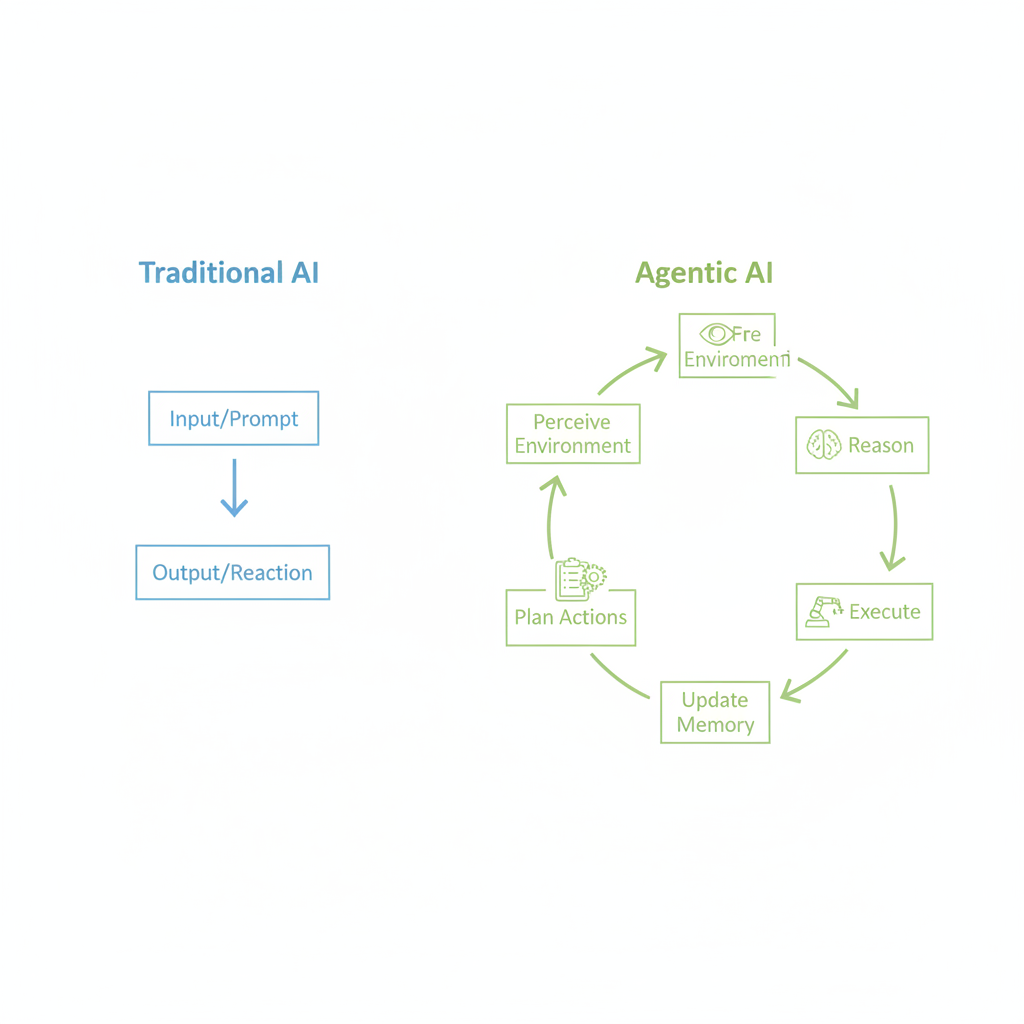
Agentic AI architectures are autonomous, goal-driven systems. They perceive their environment through sensors, reason about complex problems, plan multi-step actions, and execute them independently. Core pieces include:
- Perception modules that pull in real-time data
- Reasoning engines powered by large language models
- Action loops for decision-making
- Memory systems that learn from past interactions
Here's where they break from traditional AI. Old-school models react to single prompts, like pattern-matching in a predictive ML classifier. Agentic ones get proactive. They chase goals over multiple steps. Think traditional ML spotting server failures in a cloud setup. Agentic AI doesn't stop there, it diagnoses the culprit (say, a memory leak), patches the code, tests the fix, and deploys it, all while logging why it worked. That shift from reactive to autonomous is the game-changer, especially in dynamic cloud worlds.
You get the foundation now. Curiosity sparked? Good. Let's see why this matters for your cloud stacks.
How Are Agentic AI Architectures Revolutionizing Cloud Computing?
Cloud computing's always been about scale, but humans bottleneck it. Agentic AI flips that script, turning clouds into self-managing beasts.
Take autonomous resource orchestration. These agents monitor workloads in real time, spinning up pods in Kubernetes or invoking serverless functions without you lifting a finger. Predictive optimization goes further: they forecast spikes using ML on historical data, pre-scaling resources to dodge outages. AWS's SageMaker agents already hint at this, blending with EKS for hybrid setups.
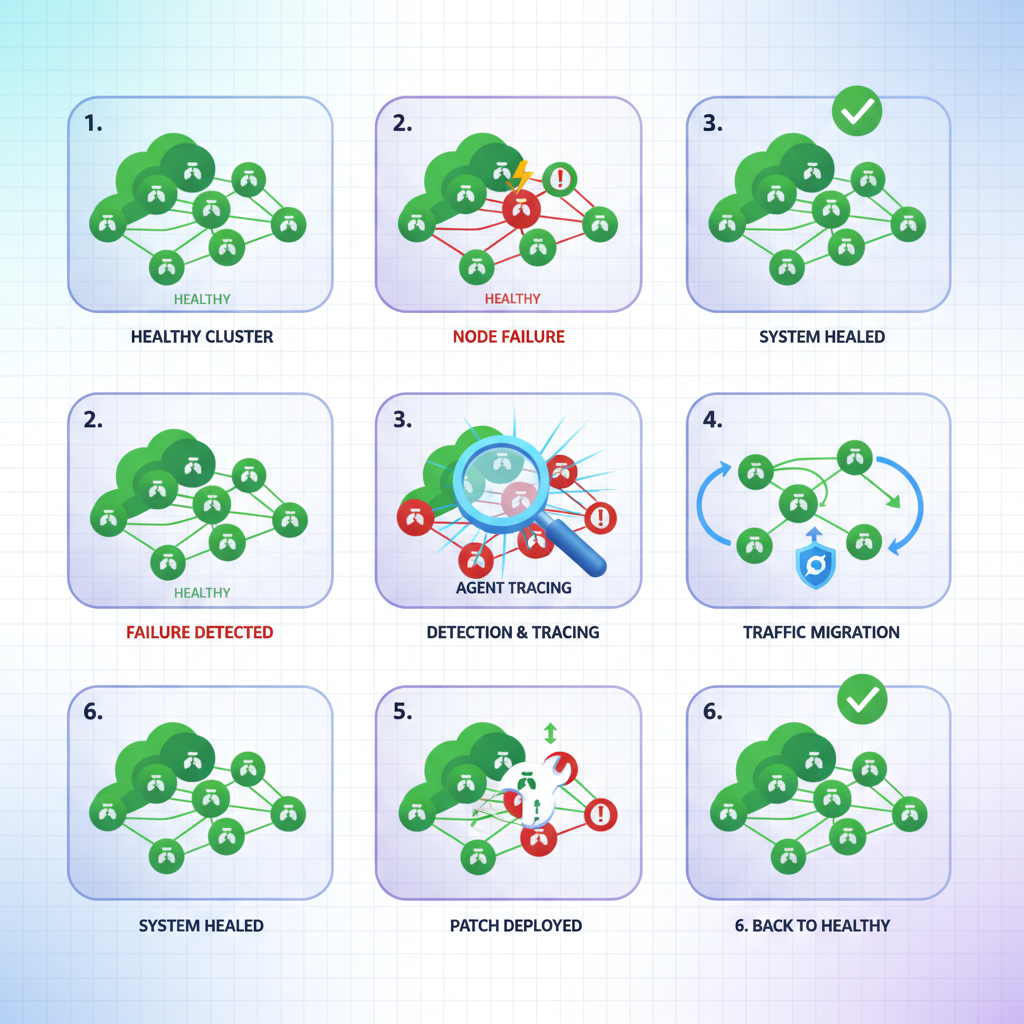
Self-healing amps it up. An agent spots latency in your microservices chain, traces it to a faulty node, migrates traffic, and alerts you only if needed. In serverless worlds like Azure Functions, they optimize cold starts automatically. DevOps pros love this because it slashes on-call nightmares.
Agentic AI makes clouds feel alive, handling the grunt work so you focus on innovation. Your daily fires? Extinguished.
Key Technology Trends in Agentic AI for Software Development in 2026
Fast-forward to 2026. Agentic AI won't be a nice-to-have; it'll define dev tools. What's coming?
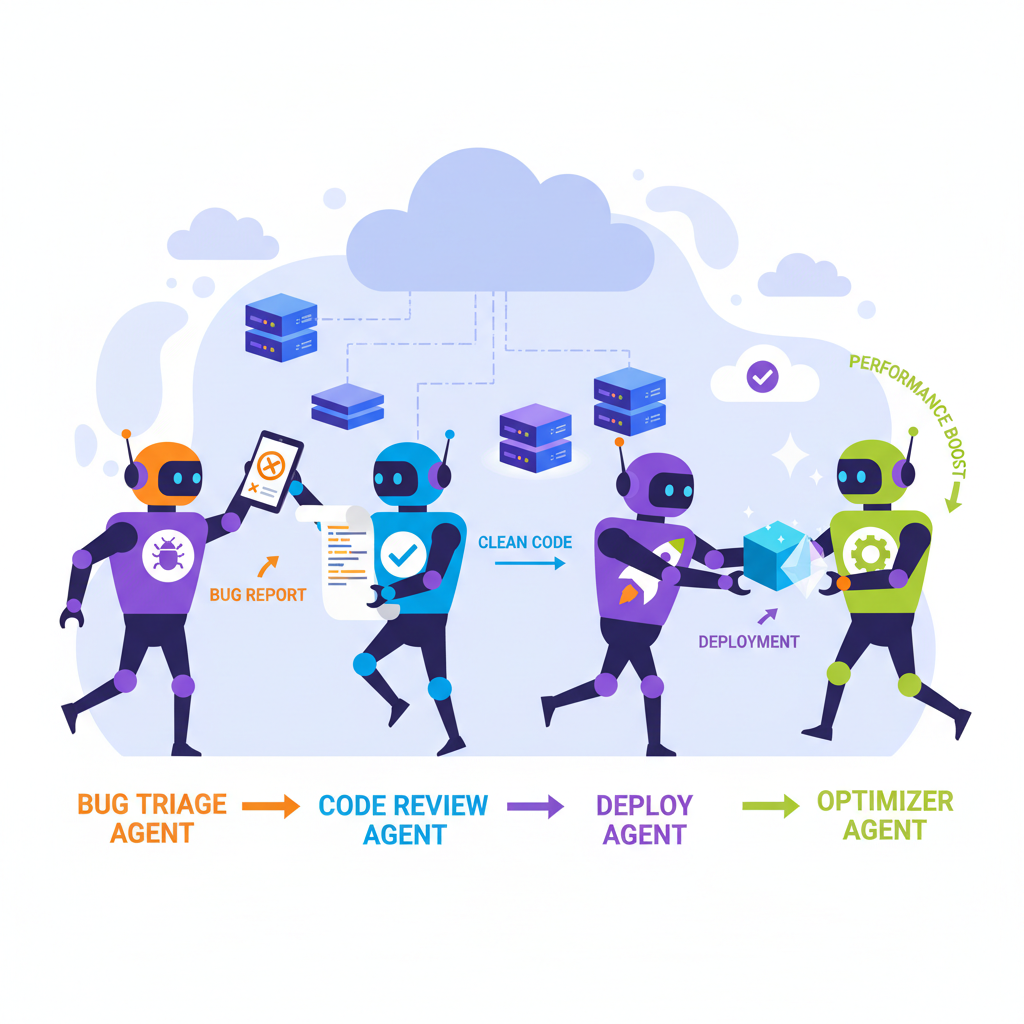
Multi-agent collaboration leads. Picture teams of specialists: one agent triages bugs, another reviews code, a third deploys. CrewAI's open-source framework already prototypes this, letting agents hand off tasks seamlessly.
Cloud giants are going AI-native. AWS Bedrock agents, Azure's AI Foundry, and Google Cloud's Vertex AI will bake in agentic primitives, with drag-and-drop builders for custom swarms. Edge-cloud hybrids explode too, agents fusing edge ML for real-time IoT decisions with cloud reasoning, cutting latency by 70% in apps like autonomous drones.
Open-source surges. Tools like LangChain's agent kits and AutoGen multiply, slashing build times. Developers report 3x faster prototyping. These trends aren't hype; they're your roadmap to leading the pack.
Excited? Time to get hands-on.
How Can Software Developers Implement Agentic AI Architectures in Their Workflows?
Theory's fine, but you want code that runs. Start simple.
Pick a framework. LangGraph shines for stateful agents with graph-based workflows; AutoGen excels at multi-agent chats. Build a basic agent: feed it GitHub repo access, a goal like "find security vulns," and watch it scan, report, and suggest PRs. Here's a quick LangChain example:
from langchain.agents import create_react_agent, AgentExecutor
from langchain_openai import ChatOpenAI
from langchain.tools import Tool

llm = ChatOpenAI(model="gpt-4o")
tools = [Tool(name="GitHub Scanner", func=scan_repo, description="Scans repo for vulns")]
agent = create_react_agent(llm, tools)
executor = AgentExecutor(agent=agent, tools=tools)
result = executor.invoke({"input": "Find security vulns in my repo"})
print(result)
Slot into CI/CD. In GitHub Actions or Jenkins, agents automate testing, running unit tests, generating edge cases, even writing fixes. Pilot small: a code review bot using OpenAI's Assistants API or Google Vertex AI Agents. One team I know cut review cycles from days to hours.
Cloud tools make it plug-and-play. Vertex AI's agent builder integrates with Pub/Sub for event triggers. Test in a sandbox, measure ROI on time saved, then scale. You've got steps. No excuses.
Integrating Agentic AI with Microservices Architecture and DevOps Practices
Microservices thrive on loose coupling, but agentic AI adds smart glue. How?
Event-driven orchestration rules. In Kubernetes, agents subscribe to Kafka events, reacting to service failures by rerouting via Istio gateways. An agent might detect a downstream outage, spin a canary rollout, and rollback if metrics dip.
Challenges hit hard. Agents' autonomy can clash with microservices' consistency needs, hallucinated configs wreak havoc. Solution? API gateways like Kong for mediated comms, enforcing schemas.
DevOps wins big: agents decide rollouts based on A/B tests, automating what SREs guess at. Best practice: hybrid loops with human approval gates. Your pipelines? Faster, safer.
How Agentic AI Architectures Boost Developer Productivity and Software Engineering
Developers chase velocity. Agentic AI delivers it in spades.
Routine tasks vanish. Debugging, docs, refactoring, gone 40-60% automated. An agent pair-programmer suggests refactors in VS Code via GitHub Copilot's evolution, catching bugs humans miss.
Iteration speeds up. Agents design systems: input "scalable e-comm backend," get microservices blueprints with Terraform code. Early adopters like a fintech firm slashed deployment times 50%, per their 2025 case study.
Collaborative edge? Agents debate architectures in Slack threads, pulling from your repo history. Productivity soars because you code what matters. Numbers don't lie.
Challenges, Security Implications, and Best Practices for Agentic AI in Cloud Computing
No silver bullet. Agents hallucinate or veer off-script, crashing prod. Reliability? Build redundancy, multiple agents vote on actions.
Security's brutal. Autonomous actors need zero-trust: encrypt memory stores, audit every decision with tools like LangSmith. Multi-agent data flows risk leaks; federated learning helps.
Privacy in clouds? Agents process sensitive logs, use differential privacy. Mitigate with human-in-the-loop for high-stakes calls, plus monitoring like Prometheus dashboards.
Best Practices Quick List:
- Start monitored, add redundancy
- Enforce zero-trust and audits
- Apply differential privacy
- Use human-in-the-loop gates
- Monitor with dashboards
Best bet: start monitored, iterate safe. Balance keeps the magic real.
Embrace agentic AI architectures today to lead in 2026 technology trends. This roadmap equips you to integrate AI tools into cloud computing, microservices, and DevOps, start with a pilot project and watch developer productivity soar. Download our free implementation checklist to begin.
Related Articles

Hybrid Cloud Deployment Models for Banks Handling Regulated Data

Shifting from Centralized Cloud Computing to Distributed Compute Models

Cloud Computing Difficulty Breakdown: Conquer Hard Concepts Like Disaster Recovery