Building Backend Systems with Java Spring Boot for Embodied AI in Robotics Startups
Hands-on tutorial on designing scalable backend development stacks using Java Spring Boot to support humanoid robots and physical AI, driving startup technology innovation.

How do you build scalable backend systems with Java Spring Boot to power embodied AI in your robotics startup, without the usual integration headaches?
By the end of this guide, you'll have a hands-on blueprint for designing backend systems, integrating AI models, and scaling up for humanoid robots. Expect code examples, architectural patterns, and best practices to speed up your startup's software development.
Why Java Spring Boot Nails Backend Development for Embodied AI
Robotics startups deal with real-time sensor data, fusing all sorts of inputs, and squeezing low-latency AI inference out of humanoid robots in messy, changing environments. Your backend has to chew through high-throughput streams and stay rock-solid under pressure. That's where Java Spring Boot comes in.
It auto-configures everything, packs in embedded servers, and hands you production-ready tools for scaling. You get Tomcat right there, no fiddling with setups. Startups love this because it slashes deployment time when you're tweaking robot control loops nonstop.
Spring Boot's dependency management is a game-changer for embodied AI too. Grab libraries without the hassle, and dive straight into your robotics code. Running on Java 21 gives you the stability these workloads demand. For perception systems, auto-config sorts out threading for handling sensors at once, so your backend grows without ugly workarounds.
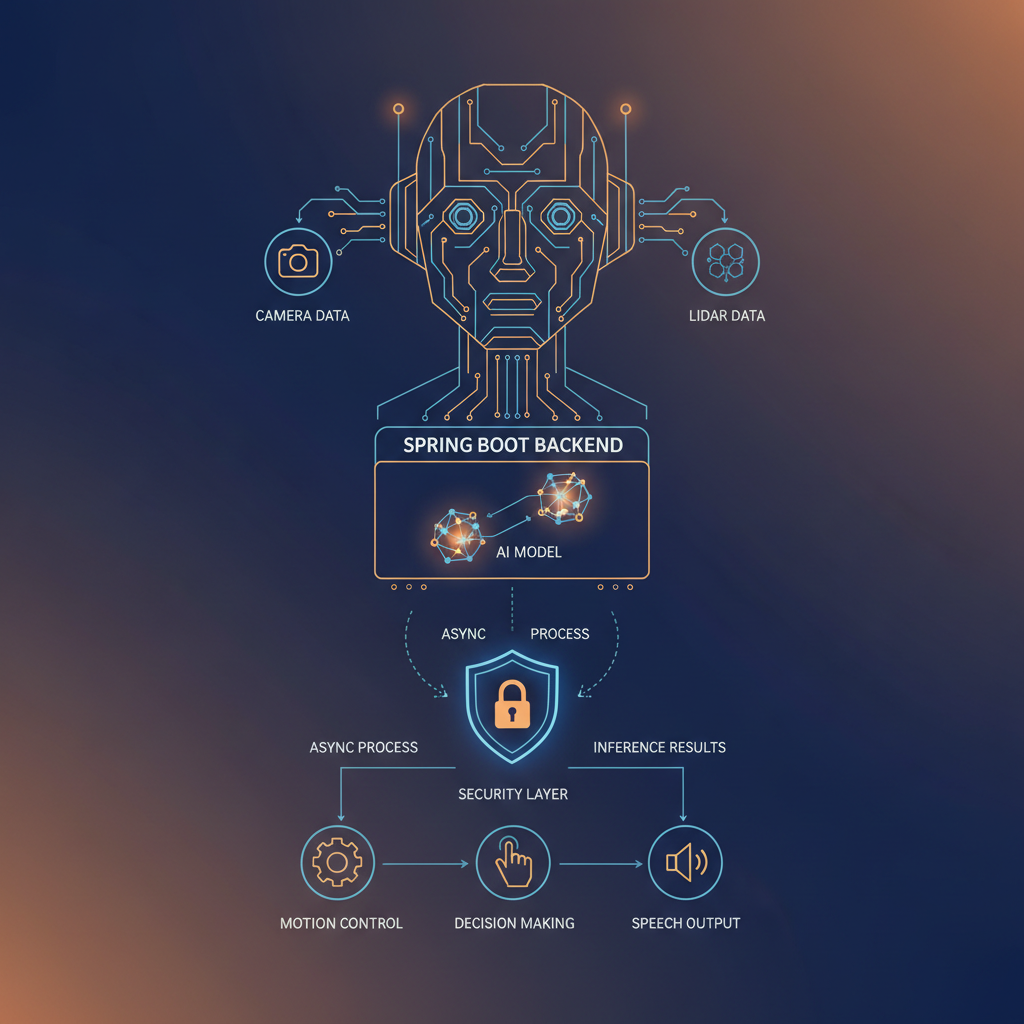
The real win? Pairing Spring Boot with AI frameworks builds backends that tame robotics chaos.
Setting Up Your Java Spring Boot Project for Robotics Apps
Head to Spring Initializr at start.spring.io. Pick Java 21 and the latest Spring Boot. Toss in Spring Web for REST endpoints, Spring Data JPA to store robot states like mission logs, and Spring AI for plugging in models. Download, unzip, fire it up in your IDE.
Tweak application.properties for robotics work: server.port=8080, plus Spring AI settings for quick model responses. Throw in WebSockets with spring-boot-starter-websocket to stream sensor data back and forth.
Test with this simple controller:
@RestController
@RequestMapping("/robot")
public class RobotController {
    @GetMapping("/status")
    public ResponseEntity<String> status() {
        return ResponseEntity.ok("Humanoid online");
    }
}
Run it: ./mvnw spring-boot:run. Boom, robotics-ready backend in minutes. Spring Boot's magic cuts the noise, ideal for startups prototyping artificial intelligence in robots.
What Architectural Patterns Make Robotics System Design Bulletproof?
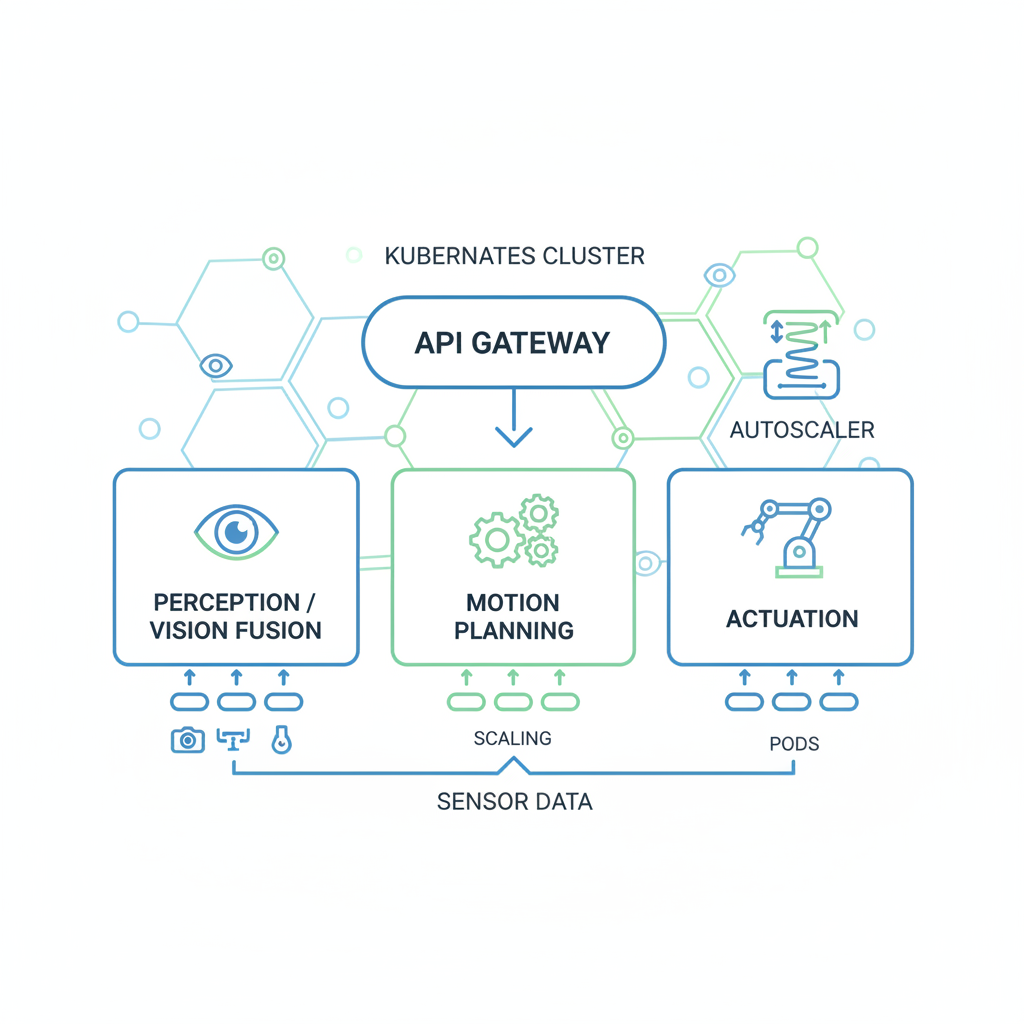
Smart robotics backends lean on patterns that have been battle-tested. Microservices break things down for easier maintenance, scaling, and deploys. Picture splitting your humanoid robot setup: one service for perception with vision fusion, another for motion planning, and one for actuation. Each handles its load spikes independently.
Spring Boot makes this straightforward with layered services, clean REST APIs, and solid data handling via Spring Data JPA. Use asynchronous processing to manage those endless sensor streams in real time.
Check this repository interface:
@Repository
public interface PerceptionRepository extends JpaRepository<SensorData, Long> {}
This setup keeps things modular as your robotics project explodes. It locks in scalable AI without the headaches.
How to Wire Artificial Intelligence Models into Your Spring Boot Backend
Spring Boot bridges the Java-AI divide nicely. Grab Spring AI or LangChain4j to power up your apps. Add the spring-ai-spring-boot-starter and serve models for robot vision tasks.
Build an inference endpoint like this:
@RestController
public class AIController {
    @Autowired private ChatClient chatClient;

    @PostMapping("/infer")
    public String infer(@RequestBody String input) {
        return chatClient.prompt(input).call().content();
    }
}
Go async with @Async to keep motion control snappy. Lock it down with Spring Security: OAuth 2.1, JWT, API keys. Startups can't risk exposing their secret sauce models. This kind of integration fuels embodied AI without drama.
Think about your robot dodging obstacles. Sensor data hits the endpoint, AI crunches it fast, backend spits out commands. Scale it for a fleet, and you're golden.
Scaling Startup Technology in Robotics with Microservices
Microservices architecture allows for independent scaling and deployment of services, which is crucial for handling the complex and varied functionalities in robotics applications.
Watch your embodied AI with Micrometer and Prometheus, eyeing metrics like inference latency or sensor throughput. Microservices let you scale pieces separately, perfect for robotics where perception might spike during navigation but chill otherwise.
In a startup, this means you deploy motion updates without touching vision code. Spring Boot shines here, keeping everything lightweight and reliable.
Best Practices to Level Up Your Embodied AI Software Development
Here are practices that boost scalability in Spring Boot backends for robotics:
- Cache repeated sensor data with Spring Cache. No point recomputing the same room map every second.
- Async processing via
@Asynceverywhere it fits, especially I/O heavy stuff. - Load balancing to enhance scalability.
Trim for edge with lightweight profiles, ditch actuators for onboard robot deploys. CI/CD via GitHub Actions: YAML for Maven builds, tests, K8s pushes. Build in fault tolerance so one glitchy sensor doesn't halt the whole bot.
Pro tip for startups: Start small, one service, then split as pains show up. Test under fake loads mimicking a robot swarm. This keeps your backend development lean and mean.
Want more? Profile your app with Spring Boot Actuator endpoints. Expose health checks for robot ops teams to ping before missions.
You've got the tools to build backend systems with Java Spring Boot for embodied AI. Fire up that first microservice. Grab a sample repo if you need a jumpstart, and turn your robotics ideas into machines that move.
Related Articles

How Twitter's AI Translation Is Breaking Language Barriers for Global Software Engineering Teams

Running LLMs Locally: Performance Gains for Backend Development Without Cloud Costs
Markdown Mastery: Crafting Transmit-Ready Docs for Backend Development Projects