
Microservices Architecture Fad: Backend Development Trends Shaping Software Engineering in 2024
Explore why developers are questioning the microservices architecture fad amid rising efficiency demands in backend development. Discover key software engineering trends, technology trends, and strategies for developer productivity in modern software development.

Microservices architecture dominated backend development trends for years, promising scalability and agility. But in 2024, it's increasingly labeled a fad as software engineers rethink its true value amid rising complexity.
By the end of this article, you'll understand why microservices architecture is waning, spot fresh backend development trends like AI integration and simplified architectures, and pick up practical strategies to boost developer productivity, DevOps efficiency, and system performance in software engineering.
1. The Rise of Microservices Architecture: From Hero to Questioned Fad
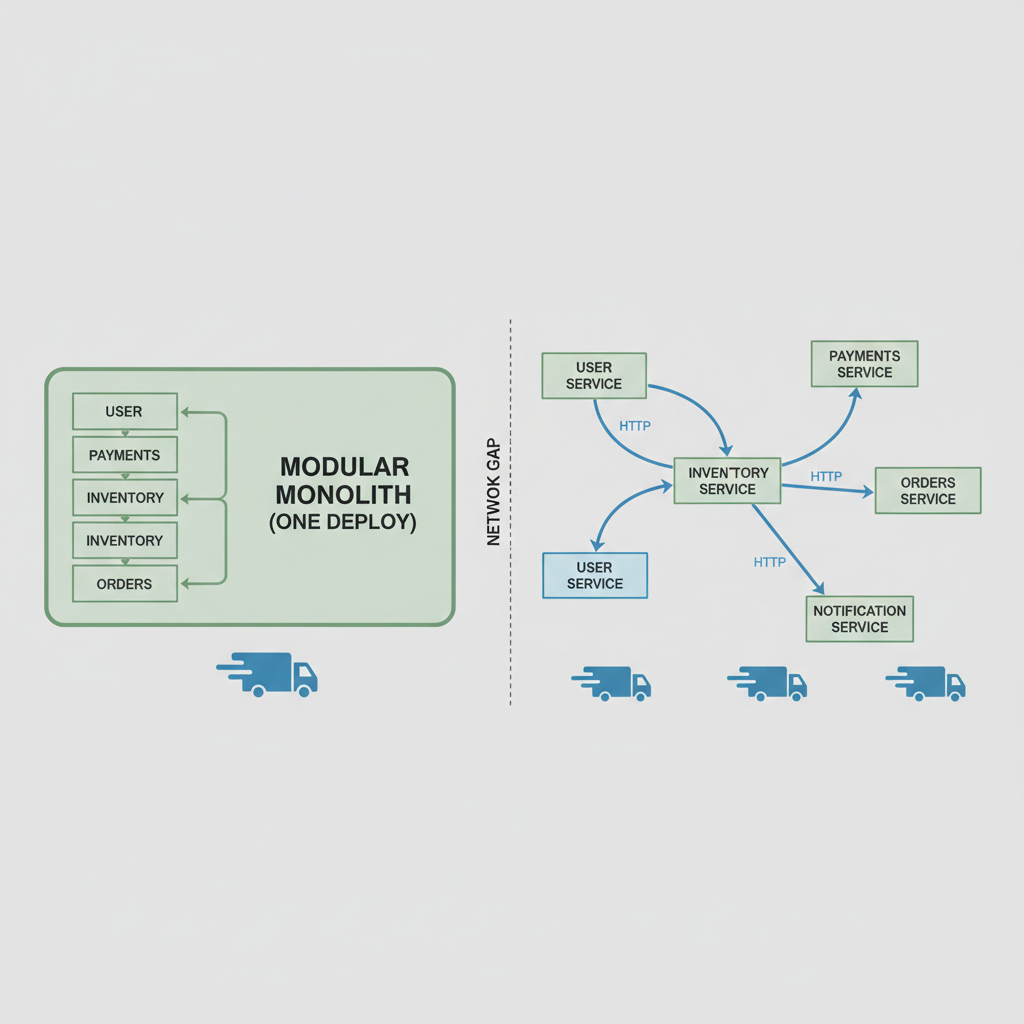
Remember when everyone buzzed about microservices? It kicked off big in the early 2010s, thanks to trailblazers like Netflix and Amazon. They shared stories of breaking massive monoliths into tiny, independent services that could scale on demand. Suddenly, teams could deploy updates to one service without touching the rest. Tech stacks got diverse too. Pick Node.js for one, Go for another. It felt like freedom.
No wonder it became the holy grail of software development. Conferences hammered it home: "Monoliths are dead!" Recruiters asked about it in every interview. But fast forward to 2024, and cracks are showing. Those real-world pain points? They're piling up. Developers are asking, is this hero turning into a villain?
2. What Are the Primary Challenges of Microservices Architecture?
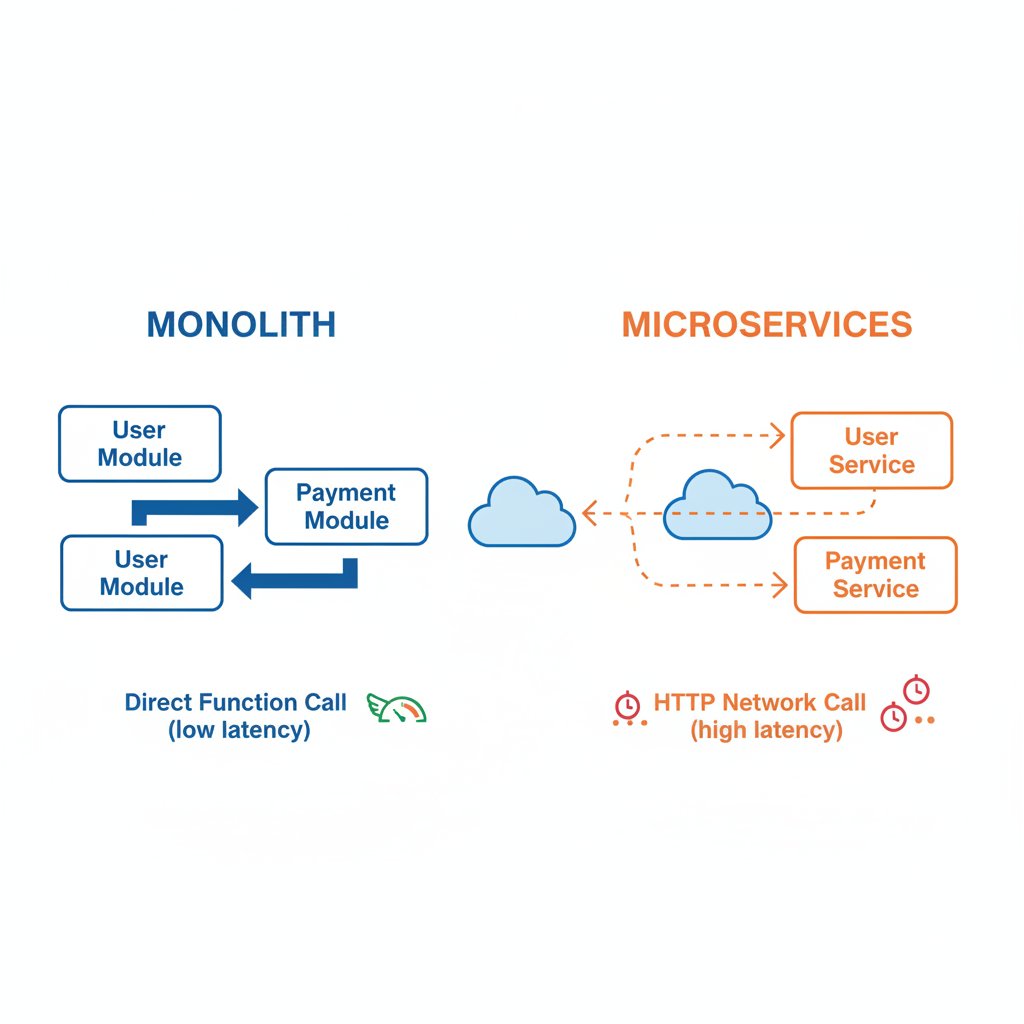
Here's where it gets frustrating. And honestly, validating if you've been burned. Distributed systems sound great until network latency hits. Services talking over HTTP? Delays add up. And don't get me started on the CAP theorem. You can't have perfect consistency, availability, and partition tolerance all at once. Pick two, suffer the third.
The main pain points boil down to:
- Ops nightmare: Monitoring dozens of services, debugging across boundaries, deployment pipelines multiplying like rabbits
- Cognitive load: Who owns what? Teams drown trying to keep track
- Skyrocketing costs: More servers, more DevOps hires
- Security risks: Every boundary is a potential breach point, from API keys to service meshes
I've talked to engineers who spent weeks chasing ghosts in logs. No wonder burnout spiked. Microservices shine for giants like Netflix. For most? Overkill.
3. Emerging Backend Development Trends Replacing Microservices in 2024
Good news: smarter options are here, and they're exciting. Take modular monoliths. Keep the simplicity of one app, but carve it into modules with clear boundaries. Scale the whole thing until you really need to split. No premature complexity.
Serverless is gaining ground. AWS Lambda or Vercel handles scaling without you lifting a finger. Edge computing pushes logic closer to users, slashing latency. AI steps in for code gen and testing. Think GitHub Copilot spitting out endpoints in seconds.
Hybrids make sense: microservices only where it counts, like high-traffic payments. Low-code platforms let devs prototype backends fast, focusing energy on business logic. These trends prioritize efficiency over hype.
4. How Artificial Intelligence Boosts Developer Productivity in Software Engineering
AI isn't fluff. It's a game-changer for backend work. Tools like GitHub Copilot or Cursor cut boilerplate by suggesting whole functions. You type "user auth endpoint," boom, scaffolded with JWTs.
Automated testing? AI hunts bugs pre-commit, generating cases you missed. System design? It recommends patterns based on your load. Eventual consistency here, ACID there. In DevOps, predictive scaling forecasts traffic spikes from logs.
Reports from teams at companies like Shopify suggest productivity jumps of around 30-50%. One dev told me he reclaimed two hours a day. That's real time for innovation, not glue code. Pair it with trends above, and you're flying.
5. DevOps and System Design Trends for Efficient Backend Development
Want reliability without the hassle? GitOps is huge. Treat infra like code in Git, auto-deploy with ArgoCD. Infrastructure as Code via Terraform keeps things declarative.
Observability-first beats service sprawl. Tools like OpenTelemetry trace everything from the start. Event-driven setups with Kafka or NATS handle async flows without full microservices.
Kubernetes evolved too: lighter distros like K3s cut overhead. Results? Mean time to recovery (MTTR) can drop to minutes, with throughput improvements of ~20-40% in benchmarks. It's about smooth ops, not architecture wars.
6. Microservices vs. 2024 Trends: A Comparison for System Performance
Let's stack them up, plain and simple.
| Aspect | Microservices | 2024 Trends (Modular Monoliths, Serverless, etc.) | Notes |
|---|---|---|---|
| Scalability | Edges out for massive teams (e.g., Uber) | Handles most apps fine; scale vertically first | Microservices for giants only |
| Complexity | Sky-high (service discovery, circuit breakers) | Low. One deploy rules them all | Trends win big here |
| Productivity | Demands ops expertise | Boosted by AI tools and low-code | Small teams punch above weight |
| Performance | Latency from extra hops adds ms | Direct calls win, lower latency | Speed matters |
| Use Cases | Bounded contexts like e-commerce search | Startups: modular; growth: hybrids | Be selective |
Bottom line: Stick with microservices for true bounded contexts like payments. Switch to modular for startups, hybrids for growth.
7. Strategies to Balance Scalability, Simplicity, and Developer Productivity
You can have it all. Try these practical steps:
- Start simple: Monoliths for MVPs
- Evolve gradually: Use the Strangler pattern. Wrap old code, replace bit by bit
- Go selective: Microservices only for true bounded contexts, like inventory vs. User profiles
- Automate everything: AI for code, DevOps for deploys
- Track metrics: DORA (deployment frequency, change fail rate), SLOs for uptime and latency
- Future-proof teams: Train on tools, not dogmas
Honest truth: happy devs build better systems.
In 2024, ditching the microservices architecture fad doesn't mean abandoning scalability. Embrace backend development trends like AI-enhanced DevOps and modular designs to supercharge software engineering, developer productivity, and system performance. Start experimenting today to stay ahead in technology trends.
Related Articles

How Twitter's AI Translation Is Breaking Language Barriers for Global Software Engineering Teams

Running LLMs Locally: Performance Gains for Backend Development Without Cloud Costs

Building Backend Systems with Java Spring Boot for Embodied AI in Robotics Startups