
AI-Native Cloud Infrastructure: Optimizing DevOps and Developer Productivity in 2025
Discover how AI-native cloud infrastructure transforms devops pipelines, boosts developer productivity, and cuts costs for software engineering teams with practical implementation guides and 2025 trends.

AI-Native Cloud Infrastructure: Optimizing DevOps and Developer Productivity in 2025
By 2025, AI-native cloud infrastructure will shake up cloud computing and DevOps. Expect 40% jumps in developer productivity and sharp cuts in operational costs. Here's how to ride these technology trends.
Look, by the time you finish reading, you'll grasp AI-native cloud infrastructure cold. You'll learn to tune DevOps pipelines for killer developer productivity, catch the top 2025 trends in AI and software engineering, and grab a straightforward step-by-step guide packed with real-world case studies. This will amp up software development in your enterprise.
What Is AI-Native Cloud Infrastructure and How Does It Differ from Traditional Cloud?
Ever feel like your cloud setup lags behind? Traditional clouds react after trouble hits. Traffic spikes? Scale by hand. Production bugs? Scramble to patch. Old school.
AI-native cloud infrastructure changes everything. AI is baked in from day one, not tacked on. Predictive analytics spots demand surges ahead of time. Auto-optimization adjusts resources instantly. ML management finds waste and kills it. No more dev-ops dashboard wars.
| Feature | Traditional Cloud | AI-Native Cloud |
|---|---|---|
| Scaling | Manual reaction to spikes | Predictive analytics forecasts demand |
| Optimization | Manual tweaks | Auto-optimization on the fly |
| Management | Siloed ops vs. Dev firefighting | ML-driven, spots and cuts waste |
| Workflows | Endless meetings, drags down | Proactive, smoother deploys, more build time |
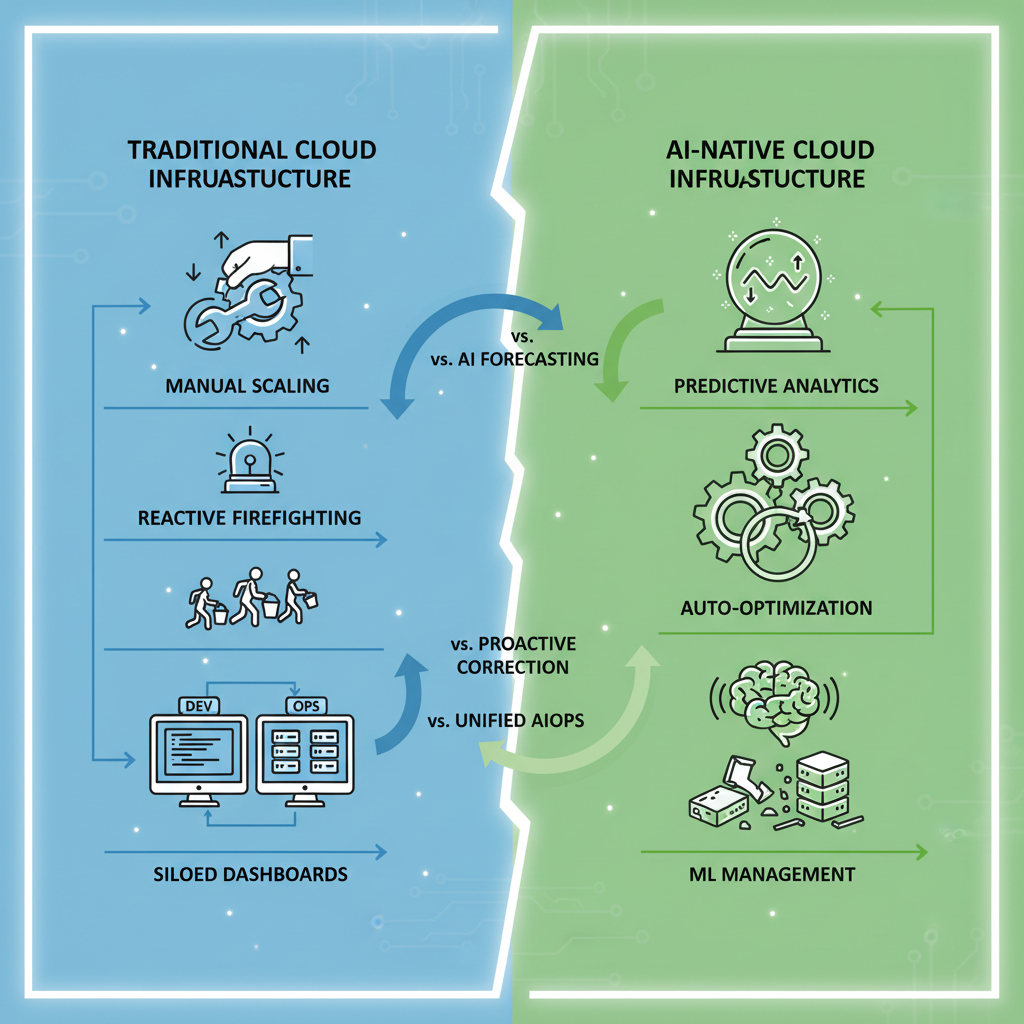
Traditional clouds demand manual tweaks, endless meetings, reactive firefighting. That slows software workflows. AI-native setups stay ahead. Resources shift smartly. Code deploys smoothly. Everything runs smooth. DevOps teams ditch infrastructure babysitting for feature building. Stuck on legacy? This shift is survival.
How AI-Native Cloud Infrastructure Optimizes DevOps Pipelines
DevOps pipelines drag sometimes. Long build waits, flaky tests, 2 a.m. Deployment fails. AI-native infrastructure automates the grind.
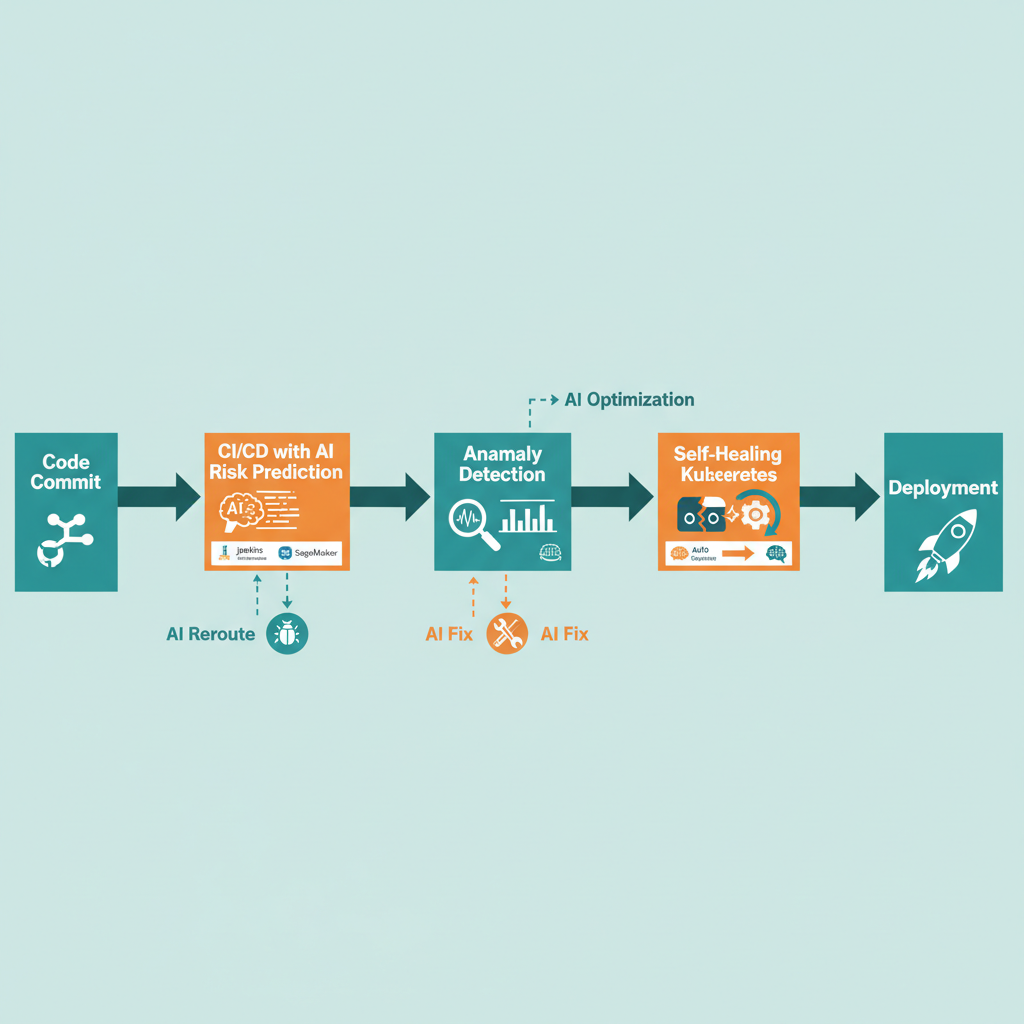
CI/CD first. AI scans code patterns and past flops to predict risks, suggests fixes, reroutes tests. Kubernetes pairs with GitOps, AI runs rollouts solo. Real-time anomaly detection catches odd traffic or leaks early.
Self-healing seals it. Pod crashes? AI replaces it and learns, updates configs. Cycles drop from days to hours. Picture a Jenkins pipeline boosted by AWS SageMaker. Code ships 3x faster, no chaos. This revolutionizes DevOps. Developers innovate instead of toil.
Tangible Benefits: Boosting Developer Productivity and Reducing Costs
Developers lose hours to grunt work. AI-native clouds slash that 40% with smart code suggestions, auto-debugging, context-aware help like a senior engineer nearby.
Costs fall 30-50%. Predictive scaling fits resources tight, ends idle bills. No overprovisioning for rare events. Outages drop. Fixes hit in minutes, not hours.
Teams collaborate better. Shared AI insights align devs and ops, speed time-to-market. A mid-sized fintech cut release cycles 25%, saved $2 million yearly on infra. Fewer outages. Happier devs. Leaner budgets. Productivity rocket fuel.
Key Trends in AI-Native Cloud Infrastructure for 2025
2025 shapes up big. Leading trends:
- Edge AI: Smarts at the edge for low-latency DevOps in IoT. Ditch central bottlenecks. Distributed systems tick perfect.
- Serverless AI ops and zero-ops platforms: AI runs functions and data flows. Multi-cloud smooth across AWS, Azure, GCP.
- Sustainable green computing: AI cuts carbon, powers down idle gear.
- Quantum-safe security: Locks in now against future threats.
These hit early adopters. They future-proof software engineering.
Real-World Case Studies: AI-Native Success in DevOps
Proof? Netflix used AI-native for amped Chaos Engineering. Deployments halved to 15 minutes. Productivity soared serving 200 million users. No midnight pages.
Siemens added predictive maintenance to pipelines. Ops costs down 35% in manufacturing DevOps. Downtime near zero. ROI in six months via phased rollouts: CI/CD first, then full infra.
Pattern? Incremental steps. A bank shifted GitHub Actions to Vertex AI, velocity up 28%. Blueprints for your crew.
How to Implement AI-Native Cloud Infrastructure: Step-by-Step Guide
Ready? No-fluff plan:
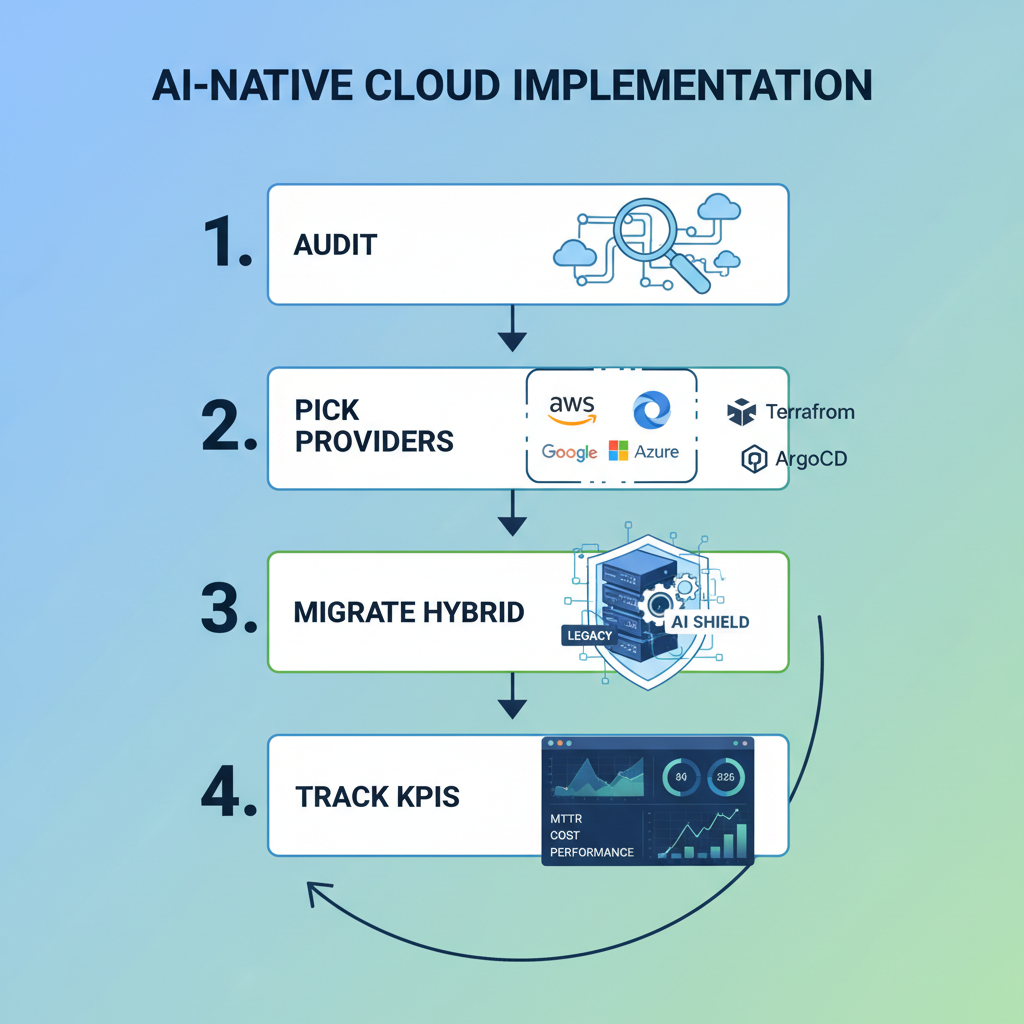
- Audit your setup. Map pipelines, spot bottlenecks in Terraform or ArgoCD. Rate AI readiness 1-10 on data.
- Pick providers. AWS Bedrock for ML ease, Vertex AI for predictions, Azure OpenAI for Microsoft stacks. Sandbox test.
- Migrate smart. Hybrid start: AI-wrap legacy with Harness or Spinnaker. Pilot one service, track wins.
- Track KPIs. MTTR under 15 minutes, commits up 30%, cost drops. AI dashboards for weekly tweaks. Six months later, hooked.
AI-native cloud infrastructure redefines DevOps, cloud computing, software development. Jump in now for 2025 developer productivity gains. Your edge waits. First step?
Related Articles

Hybrid Cloud Deployment Models for Banks Handling Regulated Data

Shifting from Centralized Cloud Computing to Distributed Compute Models

Cloud Computing Difficulty Breakdown: Conquer Hard Concepts Like Disaster Recovery