Vibecoding with Claude Code: Accelerating Developer Productivity in Software Engineering
Discover how vibecoding trends using Claude Code and Claude Skills are transforming software development workflows, boosting developer productivity, and challenging traditional software engineering practices amid rising AI tool adoption.
Vibecoding with Claude Code: Accelerating Developer Productivity in Software Engineering
What if vibecoding with Claude Code could skyrocket your developer productivity in software engineering? In a tech industry racing against time, developers are discovering this AI-driven approach that's transforming traditional coding into an intuitive, vibe-based workflow.
By the end of this article, you'll master vibecoding with Claude Code and Claude Skills, uncover productivity boosts across the software development lifecycle, tackle integration challenges, and pick up strategies to roll out AI tools in your team for real efficiency gains.
What is Vibecoding and How Does It Differ from Traditional Coding?
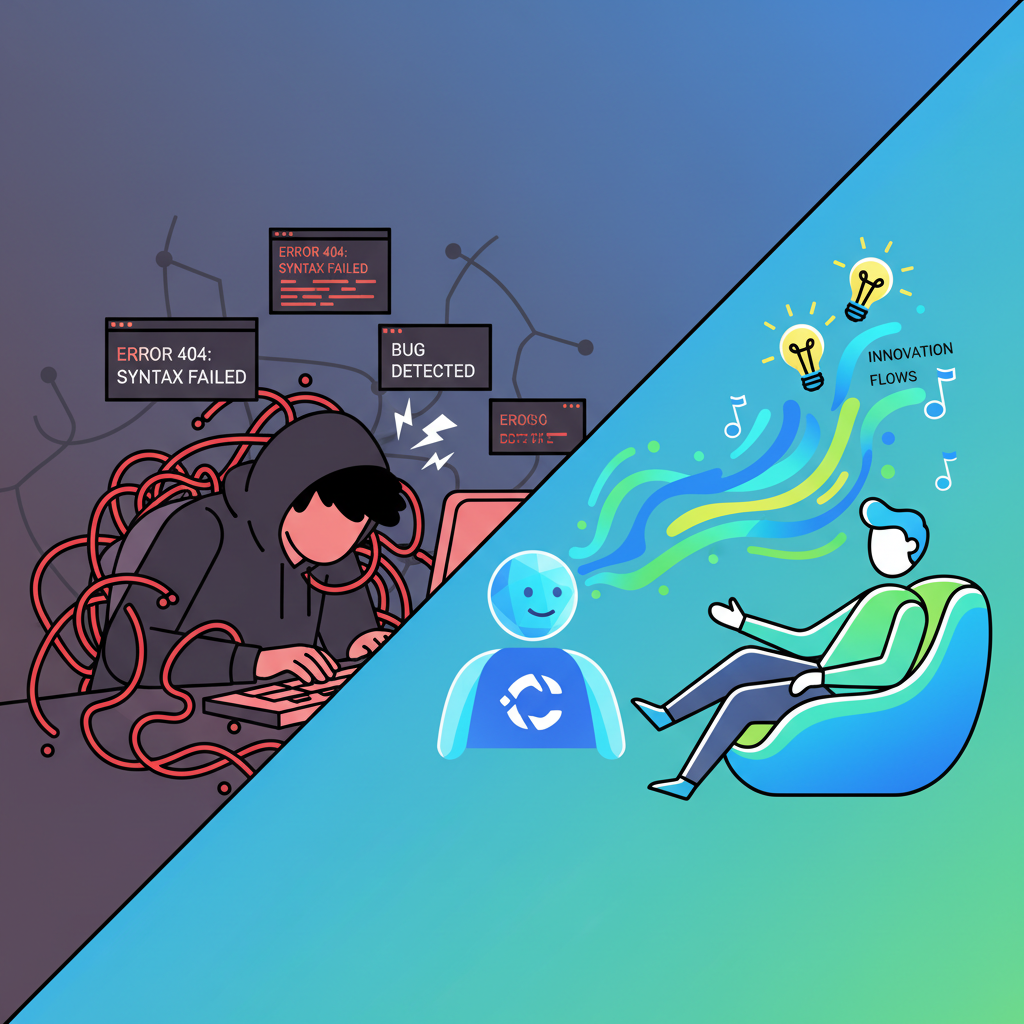
Picture this: You're not wrestling with syntax errors or boilerplate code. Instead, you're describing what you want in plain English, and AI spits out working code that matches your vibe. That's vibecoding in a nutshell. It's an intuitive, AI-assisted paradigm where natural language prompts and deep context awareness drive the process. Tools like Claude Code let you say, "Build a React component for user auth that feels modern and snappy," and it delivers.
Traditional coding? It's the grind. You type every bracket, debug line by line, and creativity often takes a backseat to rigid rules. Vibecoding flips that. Speed skyrockets because you're thinking in ideas, not semicolons. Creativity flows freer, no more blank-page paralysis. And it's emerging as a real trend in AI for software dev. Companies like Anthropic are pushing this forward, and devs everywhere are jumping in. Coding feels less like manual labor and more like jamming with a smart collaborator.
How Claude Code and Claude Skills Supercharge Developer Productivity
Now, let's talk tools. Claude Code is your heavy hitter: it generates code from vague descriptions, debugs tricky bugs with one prompt, and refactors messy legacy stuff into clean gold. Need to optimize a slow Python loop? Just ask. It'll rewrite it, explain why, and even suggest tests.
Then there's Claude Skills. These are customizable AI superpowers you tailor for niche tasks, think automated unit testing, performance tuning, or generating API docs. Chain them together, and magic happens. For intermediate devs, it's a force multiplier. Advanced ones use it to prototype entire features in hours.
The synergy? Insane. A mid-level engineer at a SaaS firm told me they cut a week's refactoring to an afternoon by vibecoding a prompt like, "Refactor this Node.js service for scalability, using Skills for load testing." Workflows speed up, burnout drops, and you ship more. If you're still solo-coding everything, you're leaving gains on the table.
Vibecoding's Impact on the Software Development Lifecycle
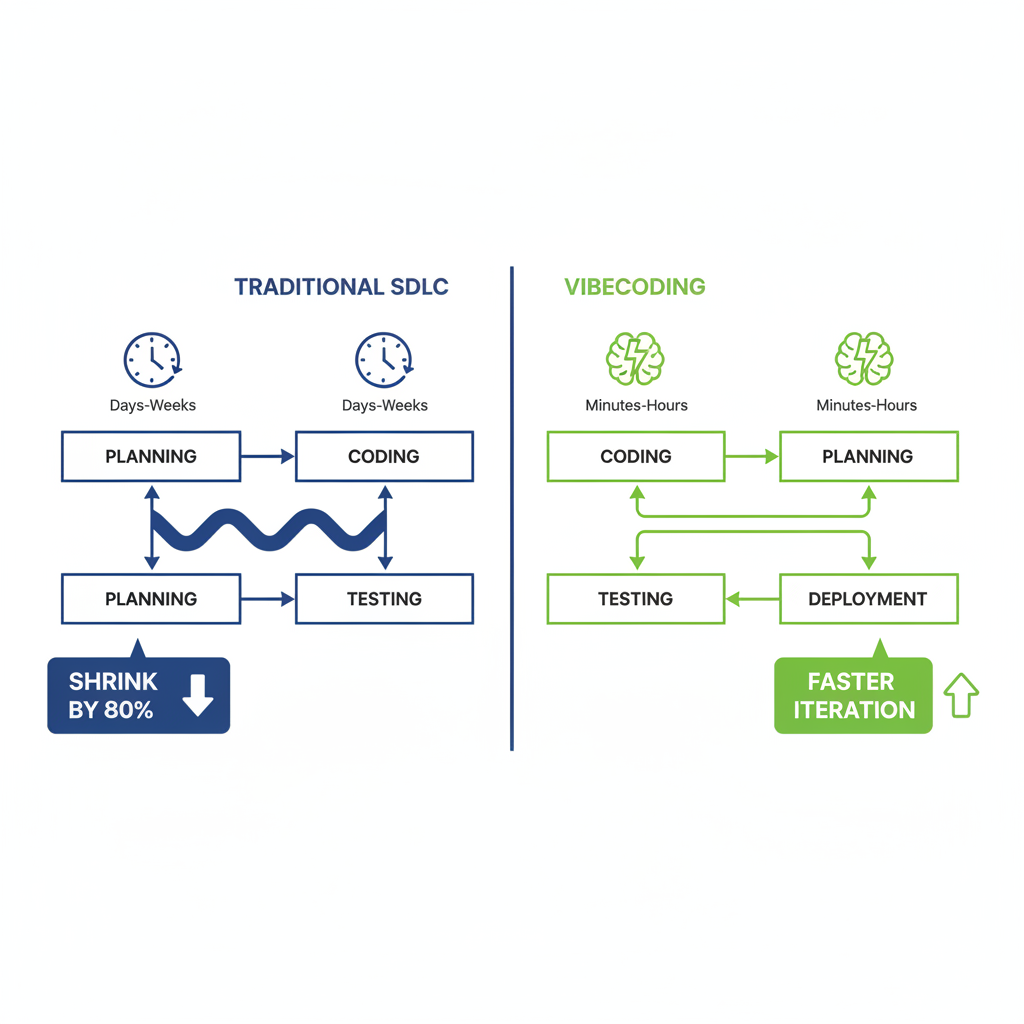
Vibecoding doesn't just patch one stage, it reshapes the whole SDLC. Start with planning. Throw AI prompts at ideation: "Brainstorm microservices for an e-commerce backend." Wireframes, architecture sketches, and trade-offs appear in minutes.
Coding phase? Pure acceleration. Describe the logic, iterate via chat, "Make it handle 10k concurrent users." Traditional iteration loops shrink from days to chats. Testing and deployment get automated love too. Claude Skills whip up test suites, catch edge cases, and integrate with CI/CD pipelines like GitHub Actions. One team deployed a full feature branch with vibecoded tests in under an hour, versus their old two-day manual QA.
Across the lifecycle, it's seamless. Bottlenecks vanish, and teams move faster without sacrificing quality.
Measurable Impacts: Data and Case Studies on Vibecoding Productivity Gains
Talk is cheap, numbers sell it. Here's some data from reports and real-world examples:
| Source/Example | Reported Gain | Details |
|---|---|---|
| GitHub dev survey | Up to ~50% cut in coding time | Averaged across thousands of repos |
| Fintech startup (fraud detection) | ~3x faster feature delivery | Weeks down to days, including tests; scaled to production |
| Mid-sized bank | ~40% slash in deployment cycles | Boosted ROI on dev hours |
| McKinsey report | 20-55% productivity lifts | Industry-wide for AI-augmented coding |
Tech insiders agree: For software engineering, it's real money, fewer overtime hours, quicker market response.
Challenges and Limitations of Integrating Claude Code into Workflows
But hold up, it's not all sunshine. Key challenges include:
- Learning curve: Prompt engineering isn't magic; crappy prompts yield crappy code. Newbies spend weeks honing "vibes" into precise instructions.
- Dependency risks: Lean too hard on AI, and your code review skills atrophy. Quality dips if you don't verify outputs, hallucinations happen, like inventing non-existent APIs.
- Security: Sharing proprietary code with cloud AI raises IP leaks or vuln exposures. One dev team hit a snag when Claude suggested a deprecated library with known exploits.
Mitigate with hybrid approaches: AI for drafts, humans for audits. And always sandbox sensitive projects.
How to Implement Vibecoding with Claude Skills for Maximum Benefits
Ready to dive in?
- Train your team. Run a half-day workshop on prompting, start simple, like "Generate a REST API endpoint," then layer in context.
- Pilot it. Pick a low-stakes project, say refactoring a utility library. Integrate Claude Skills for testing via plugins in VS Code or JetBrains. Track time saved with tools like Toggl.
- Scale smart. Roll to full teams with best practices: Use iterative prompts ("Tweak this for better error handling"), version control everything, and pair AI with code reviews. Measure success via metrics like features shipped, bug rates, dev satisfaction.
One tip: Customize Skills for your stack. A React-heavy team? Build one for hooks optimization. Results compound fast.
The Future of Vibecoding in Software Engineering and Technology Trends
Looking ahead, vibecoding's just warming up. AI tools will get smarter, real-time collab, multimodal inputs (voice, sketches), deeper IDE embeds. Trends point to agentic AI handling entire SDLC chunks autonomously.
Devs? Your role evolves from typists to architects and prompt wizards. Expect hybrid teams where juniors vibe-prototype and seniors strategize. By 2030, it'll be standard, per forecasts like Gartner's.
Why wait? Grab Claude Code today, experiment on a side project. The edge goes to early adopters.
Vibecoding with Claude Code and Claude Skills isn't just a trend, it's the accelerator your software engineering team needs. Start integrating these AI tools today to boost developer productivity and stay ahead of technology trends. Download Claude, vibe code, and watch your workflows transform.
Related Articles
Agentic AI CLI Tools for Boosting Developer Productivity in Node.js Software Development

Hybrid Cloud Deployment Models for Banks Handling Regulated Data
PAN-OS GlobalProtect CVE-2026-0257 Active Exploitation Steps for DevOps Teams